Lazy eye (amblyopia) and astigmatism are two common vision conditions that can impact eyesight. Sometimes, they occur together and affect overall visual development. In this blog post, we’ll discuss the connection between lazy eye and astigmatism.
Table of contents
What is Lazy Eye?
Lazy eye, or amblyopia, is a vision disorder that occurs when one eye does not develop properly. This condition usually begins in early childhood when the brain starts favoring one eye over the other due to a visual impairment, such as:
– misalignment (strabismus) or
– a significant difference in prescription between the two eyes (anisometropia).
Over time, the weaker eye fails to send clear images to the brain, leading to reduced vision that cannot be fully corrected with glasses or contact lenses alone.
Causes of Lazy Eye
Causes of lazy eye include:
- Strabismus (eye misalignment)
- Significant refractive differences between the two eyes (anisometropia)
- Cataracts or other vision-blocking conditions in early childhood
- Prolonged untreated astigmatism
What is Astigmatism?
Astigmatism is a common refractive error caused by an irregularly shaped cornea or lens. Instead of being perfectly round, the cornea has an uneven curvature, leading to distorted or blurred vision at all distances. This occurs because light entering the eye is not focused properly on the retina.
Symptoms of Astigmatism
- Blurred or distorted vision
- Eye strain or discomfort
- Headaches, especially after prolonged reading or screen use
- Difficulty seeing at night
How Are Lazy Eye and Astigmatism Connected?
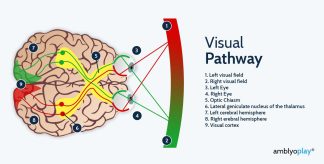
When a child has significant astigmatism in one eye but not the other, the brain may rely more on the eye with clearer vision, leading to amblyopia. If left untreated, the brain will ignore input from the weaker eye, reducing its ability to develop normal vision. This condition, known as refractive amblyopia, is one of the most common forms of lazy eye.
Astigmatism can lead to lazy eye when one eye has a significantly higher degree of astigmatism than the other, causing the brain to rely more on the stronger eye while ignoring visual input from the weaker one.
This can result in refractive amblyopia, a condition where the underused eye fails to develop normal vision.
Treatment Options for Lazy Eye and Astigmatism
1. Corrective Lenses
Glasses or contact lenses can help correct astigmatism and improve vision clarity, reducing the risk of developing amblyopia. If detected early, wearing the correct prescription can prevent further vision loss.
2. Patching Therapy
For children with amblyopia, patching the stronger eye forces the brain to use the weaker eye, helping to strengthen its visual function. Eye patches are often worn for a few hours daily, depending on the severity of amblyopia.
3. Atropine Drops
Atropine eye drops can be used as an alternative to patching. The drops blur vision in the stronger eye, encouraging the brain to rely on the weaker one.
4. Vision Therapy
Vision therapy involves specialized exercises designed to improve eye coordination and strengthen the weaker eye. This can be done in a clinical setting or at home with prescribed exercises.

5. Surgical Intervention (in Some Cases)
In severe cases, surgery may be required to correct strabismus (misaligned eyes) or remove cataracts that contribute to amblyopia. However, this is usually considered only if other treatments fail.
Importance of Early Detection
Early diagnosis and intervention are crucial for successfully treating both lazy eye and astigmatism.
Regular eye exams for children, especially before the age of 6, can help detect these conditions before they lead to permanent vision impairment.
If a child frequently squints, tilts their head to see better, or complains of headaches or blurry vision, a visit to an eye specialist is recommended.
Conclusion
Lazy eye and astigmatism are two separate but sometimes interconnected vision conditions that can impact visual development. Astigmatism can contribute to the development of lazy eye if left uncorrected, leading the brain to favor one eye over the other.
While astigmatism affects the shape of the cornea and can be corrected with glasses, lazy eye requires more targeted treatment to strengthen the weaker eye.
Early intervention with corrective lenses, patching, or vision therapy can significantly improve visual outcomes and prevent long-term impairment.
Frequently Asked Questions
Can astigmatism cause lazy eye?
Yes, uncorrected astigmatism (specially when one eye has significantly more astigmatism than the other) can lead to lazy eye (amblyopia). The brain starts ignoring the blurry input from the weaker eye, resulting in reduced vision that may become permanent without treatment.
How can I tell if my child has astigmatism or lazy eye?
Signs of astigmatism include blurred vision, frequent squinting, headaches, and difficulty seeing at night. Lazy eye, on the other hand, may cause poor depth perception, eye misalignment, or one eye appearing weaker. A comprehensive eye exam with an optometrist or ophthalmologist is the best way to diagnose these conditions.
Can lazy eye and astigmatism be treated at the same time?
Yes, both conditions can be treated simultaneously. Corrective lenses help manage astigmatism, while patching therapy, atropine drops, or vision therapy can strengthen the weaker eye in cases of lazy eye. Early intervention significantly improves outcomes for both conditions.
Will glasses fix a lazy eye?
Glasses usually do not completely fix a lazy eye (amblyopia), but they can be an important first step in treatment.
How do glasses help with a lazy eye?
If the lazy eye is caused by blurry vision from refractive errors such as farsightedness, nearsightedness, or astigmatism, glasses can improve clarity in the weaker eye. In some children, this alone may significantly improve the condition.
What are the signs of astigmatism in children?
Common signs of astigmatism in children include:
– Blurry vision
– Squinting
– Headaches
– Eye strain
– Difficulty reading
– Poor night vision
What are the symptoms of lazy eye?
Lazy eye symptoms may include:
– One eye drifting inward or outward
– Poor depth perception
– Favoring one eye
– Reduced vision in one eye
– Failing a vision screening
– A comprehensive eye exam is required for diagnosis.