Fun activities that help strengthen your child’s vision can support the way your child reads, writes, plays, learns, and moves through the world. Vision is not only about seeing clearly. Children also rely on eye tracking, focusing, depth perception, eye-hand coordination, and visual processing every day.
Simple home activities can encourage these skills through play. They should not replace a comprehensive eye exam or professional vision therapy when needed, but they can help your child build stronger visual habits in a relaxed and enjoyable way.
Table of contents
- Why Strong Visual Skills Matter for Children
- Signs Your Child May Need Vision Support
- Puzzle and Building Games for Visual Skills
- Reading, Mazes, and Writing for Eye Tracking
- Ball Games That Build Eye-Hand Coordination
- Outdoor Play for Depth Perception and Balance
- Near and Far Focus Games for Children
- Drawing and Tracking Activities for Better Vision
- Safe Ways to Practice Vision Activities at Home
- When to Consider Pediatric Vision Therapy
- Help Your Child Build Stronger Visual Skills
Why Strong Visual Skills Matter for Children
Good vision involves more than reading letters on an eye chart. A child also needs both eyes to work together, shift focus smoothly, follow moving objects, and understand where things are in space.
These visual skills support classroom learning, sports, handwriting, reading fluency, and everyday coordination. When a child’s eyes and brain work together efficiently, many daily tasks feel easier and less tiring.
If visual skills are weak, children may become frustrated during reading, homework, or play. They may avoid certain activities because their eyes are working harder than expected.
Signs Your Child May Need Vision Support
Some children do not know how to explain vision problems. Instead, parents may notice changes in behaviour, attention, or comfort.
Common signs include losing place while reading, skipping words, covering one eye, rubbing the eyes, tilting the head, or complaining of headaches. A child may also avoid books, struggle with handwriting, or become tired quickly during near work.
Other signs may appear during play. Difficulty catching a ball, judging distance, completing puzzles, or copying from the board may point to visual skill challenges.
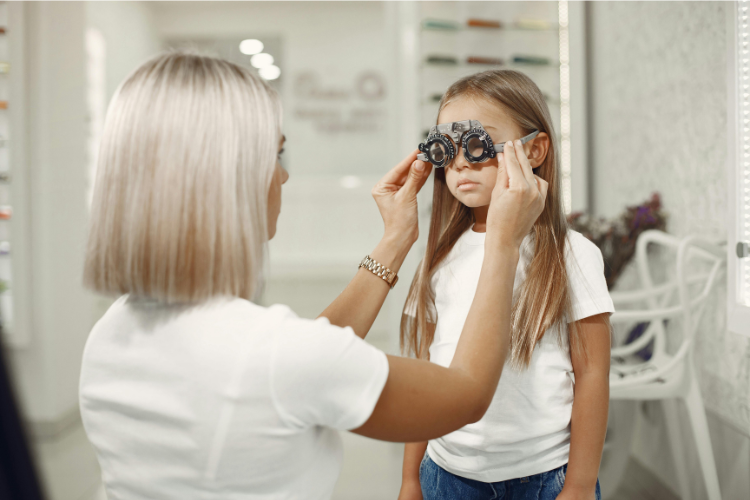
If these signs happen often, schedule a comprehensive pediatric eye exam. Early support can make school, sports, and daily activities more comfortable.
Puzzle and Building Games for Visual Skills
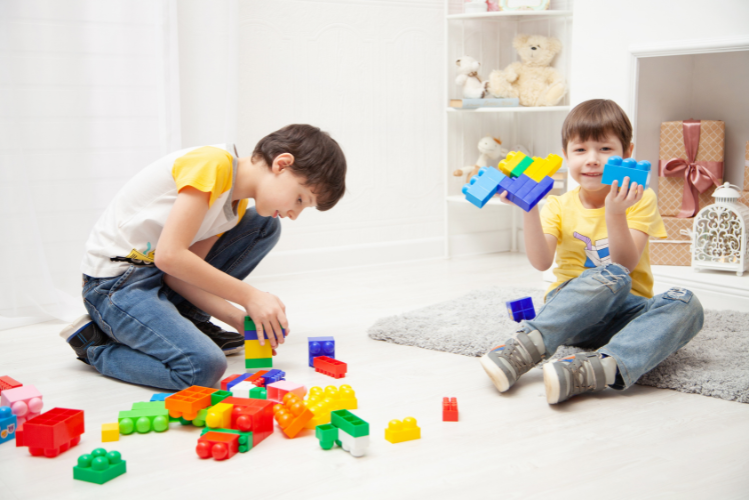
Puzzles and building toys are excellent tools for visual development. They encourage children to compare shapes, notice details, rotate pieces mentally, and understand how parts fit together.
Jigsaw puzzles, shape sorters, tangrams, pattern blocks, and LEGO-style building sets can support visual memory, spatial awareness, fine motor skills, and problem-solving.
Start with a level your child can complete with mild effort. The goal is to create a positive challenge, not frustration. You can make the activity more interactive by asking questions like, “Which piece has the same color?” or “Can you find the corner piece?” This encourages careful looking and visual discrimination.
Reading, Mazes, and Writing for Eye Tracking
Reading is one of the most important daily activities for visual development. It requires the eyes to move smoothly from word to word and line to line. Reading together can support tracking, attention, and visual stamina. Use your finger or a bookmark under the line if your child often loses their place.
Mazes, dot-to-dot pages, word searches, hidden-picture books, and tracing activities can also help children practice controlled eye movements. These activities encourage the eyes to follow paths accurately.
Writing and drawing patterns can be helpful too. Ask your child to trace letters, copy shapes, or draw lines through a maze without touching the borders.
Keep these sessions short and encouraging. Five to ten minutes of focused play is often better than a long activity that causes fatigue.
Ball Games That Build Eye-Hand Coordination
Ball games are among the best fun activities that help strengthen your child’s vision because they combine movement, timing, focus, and coordination.
Tossing and catching a soft ball helps children judge speed, direction, and distance. Rolling a ball back and forth can be a good starting point for younger children.
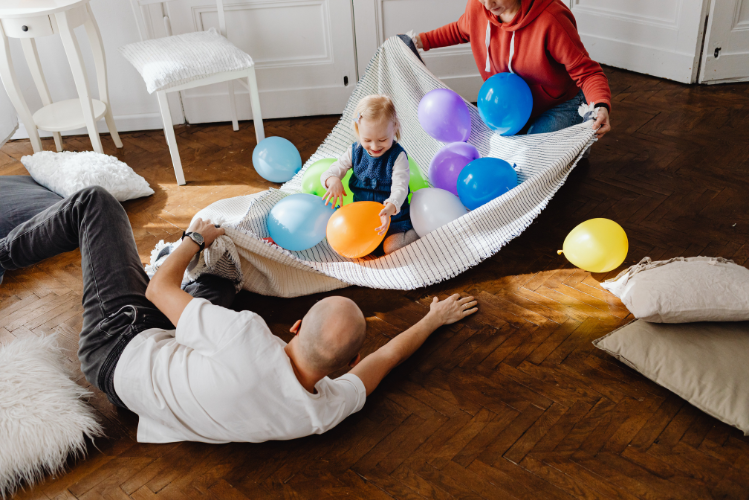
Balloons, scarves, beanbags, and beach balls move more slowly than small balls, making them easier to track. These are great options for children who are still developing coordination.
You can also try target games. Ask your child to toss a beanbag into a basket, roll a ball toward a line, or knock down soft blocks. These games support depth perception and visual-motor planning.
Outdoor Play for Depth Perception and Balance
Outdoor play gives children a wide range of visual experiences. Running, climbing, jumping, and balancing all require the eyes and body to work together.
Activities like hopscotch, jump rope, bike riding, obstacle courses, and playground play can support depth perception, balance, peripheral awareness, and coordination.
Nature walks are also useful. Ask your child to spot objects far away, find certain colours, or follow a moving bird or car with their eyes.
Outdoor play also gives children a break from prolonged near work. Balancing close-up tasks with movement and distance viewing supports overall visual comfort.
Near and Far Focus Games for Children
Children often switch focus between near and far objects throughout the school day. They may look from a notebook to a classroom board and back again many times.
You can practice this skill at home with simple near-and-far games. Place one target close to your child and another across the room. Ask your child to look at the near target, then the far target, and describe each one.
Use letters, numbers, stickers, or simple pictures as targets. For example, your child can read a letter on a card nearby and then find the same letter on a wall across the room.
This activity supports flexible focusing and visual attention. Stop if your child feels discomfort, dizziness, or eye strain.
Drawing and Tracking Activities for Better Vision
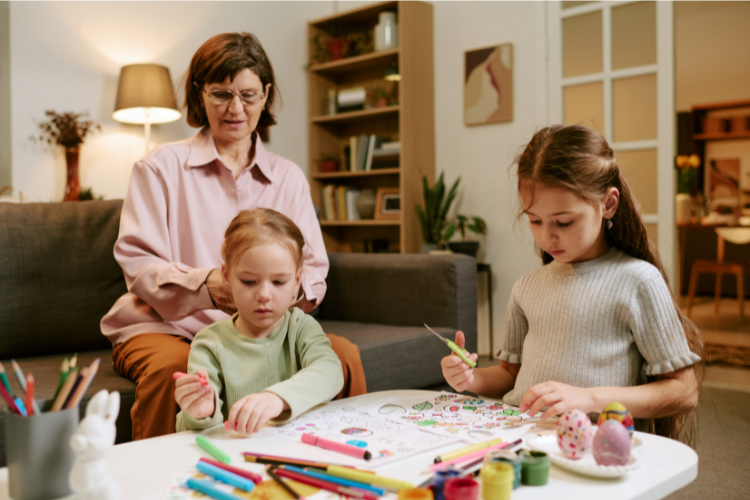
Creative activities can support fixation, tracking, and eye-hand coordination. Drawing, colouring, tracing, and following lines all require the eyes to guide the hands.
Draw roads, loops, waves, or zigzags on paper and ask your child to trace them with a crayon. You can also let a toy car “drive” along the path.
Another fun option is a balloon activity. Write letters, numbers, or shapes on a balloon. Gently toss or roll it and ask your child to find a specific symbol.
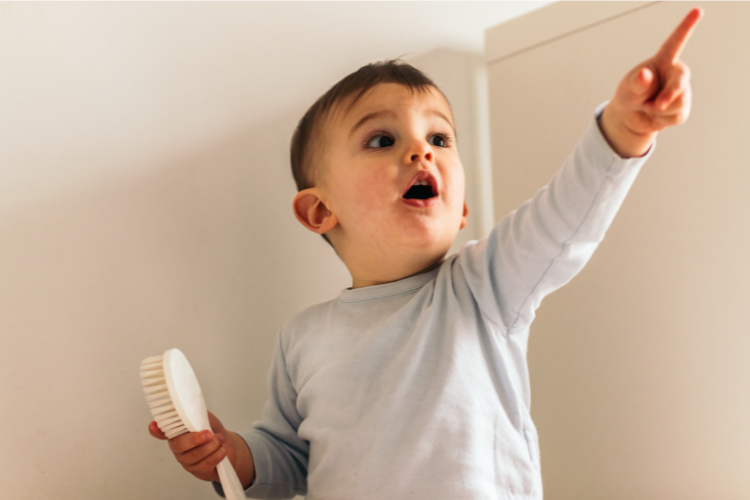
For fixation practice, place stickers around the room and ask your child to look at one, then another. Turn it into a game by calling out colours, shapes, or numbers.
These fun activities that help strengthen your child’s vision are easy to adjust for different ages and skill levels.
Safe Ways to Practice Vision Activities at Home
Home activities should always feel safe, comfortable, and age-appropriate. Choose toys without sharp edges or small parts for young children.
Avoid pushing through discomfort. If your child complains of headaches, double vision, nausea, dizziness, blurred vision, or eye pain, stop the activity.
Keep instructions simple and positive. Children benefit more when they feel successful and engaged.
It is also important to limit long periods of close-up work. Encourage breaks, outdoor play, and activities that involve looking at different distances.
The goal is not to force the eyes to work harder. The goal is to support visual skills through playful, comfortable practice.

When to Consider Pediatric Vision Therapy
Home play can support healthy visual development, but it cannot diagnose or treat a vision disorder. Some children need professional care for eye teaming, focusing, tracking, or visual processing problems.
Pediatric vision therapy may be recommended when visual skill difficulties affect reading, learning, coordination, attention, or comfort. A trained eye care professional can determine whether therapy is appropriate.
If your child struggles with schoolwork, avoids reading, has frequent headaches, or shows signs of visual discomfort, do not wait for the problem to become worse.
A comprehensive eye exam can identify whether your child needs glasses, vision therapy, monitoring, or another form of support.
Help Your Child Build Stronger Visual Skills
The best fun activities that help strengthen your child’s vision are simple, playful, and consistent. Puzzles, reading games, mazes, ball play, drawing, outdoor movement, and focus games can all encourage important visual skills.
Start small. Choose one or two activities your child enjoys and practice for a few minutes at a time. Keep the experience positive and relaxed. With the right balance of play, observation, and professional guidance when needed, you can help your child build confidence in reading, learning, sports, and everyday life.
AmblyoPlay can also be a helpful part of this journey, offering engaging game-based activities designed to support children as they build visual skills in a fun, child-friendly way.
If you notice repeated signs of vision problems, schedule a comprehensive pediatric eye exam. Early care can help your child see, learn, and play more comfortably.
Can fun activities really help strengthen my child’s vision?
Yes, fun activities can support important visual skills such as eye tracking, focusing, eye-hand coordination, depth perception, and visual attention by encouraging the eyes and brain to work together during play. Activities like puzzles, ball games, mazes, drawing, and outdoor play can be helpful, but they should not replace a comprehensive eye exam or professional vision therapy if your child has a diagnosed vision problem.
What are the best activities for improving eye-hand coordination?
Some of the best activities for improving eye-hand coordination include catching and tossing a soft ball, balloon play, beanbag target games, building blocks, drawing, tracing, and puzzles. These activities help children practice judging distance, following movement, planning hand movements, and coordinating what they see with how they move.
How often should my child do vision-supporting activities?
A few minutes a day can be helpful, especially when the activities feel relaxed and playful. Start with 5 to 10 minutes at a time and watch your child’s comfort level, because short, positive, and consistent practice is better than pushing through tiredness, frustration, headaches, or eye strain.
When should I be concerned about my child’s vision?
You should consider a pediatric eye exam if your child often loses their place while reading, skips words, rubs their eyes, covers one eye, tilts their head, complains of headaches, avoids reading, or struggles with catching, copying, or focusing. Repeated signs of discomfort or difficulty should not be ignored, even if your child passed a basic school vision screening.
Can AmblyoPlay help support my child’s visual skills?
AmblyoPlay can be a helpful part of your child’s visual development journey. It offers engaging game-based activities designed to support children as they build visual skills in a fun, child-friendly way.