


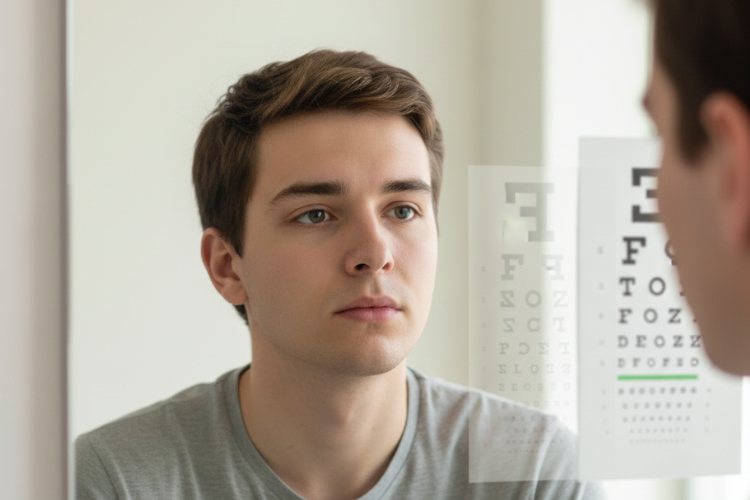
If you are wondering how to know if you have lazy eye, you are not alone. Many people live with mild vision problems for years without realizing the cause. Lazy eye, medically known as amblyopia, can affect both children and adults. The sooner it is recognized, the better the chances of improvement.
In this article, you will learn how to know if you have lazy eye, what signs to look for, how it is diagnosed, and what steps to take next. The information is clear, practical, and based on professional eye care standards.
Table of contents
What is Lazy Eye?
Lazy eye, or amblyopia, is a condition where one eye does not develop normal vision, even though it may look physically healthy. The brain begins to favor the stronger eye and ignores signals from the weaker one.
Over time, this weak connection between the brain and the eye reduces visual sharpness. Without treatment, the weaker eye may never reach its full potential.
Lazy eye usually starts in childhood, but adults can also discover they have it later in life.
Common Signs and Symptoms
Many people ask how to know if you have lazy eye because the symptoms are not always obvious. Here are the most common signs:
1. Blurry Vision in One Eye
You may notice that one eye sees clearly while the other appears blurry, even with glasses.
2. Squinting or Closing One Eye
Some people unconsciously close one eye when reading or focusing. This can be a sign that the brain prefers one eye.
3. Poor Depth Perception
Difficulty judging distances, catching a ball, or parking a car may indicate weak coordination between the eyes.

4. Head Tilting
Tilting your head slightly to one side can be a subtle attempt to improve visual clarity.
5. Eye Strain or Fatigue
Frequent eye strain, especially during reading or screen use, may be linked to unequal vision.
Not everyone experiences all these symptoms. Sometimes, the signs are very mild.
How Lazy Eye Feels Like
Understanding daily challenges can help you recognize patterns.
You may struggle more with:
- Reading for long periods
- Sports requiring hand-eye coordination
- Night driving
- Tasks needing fine detail work
Some people also describe a feeling that one eye is “doing all the work.”
Because the stronger eye compensates, lazy eye often goes unnoticed for years.

How to Know If You Have Lazy Eye: Simple At-Home Clues
While only an eye care professional can diagnose amblyopia, you can try a basic check at home.
The Cover Test
- Cover one eye.
- Look at a word, object, or sign across the room.
- Switch eyes.
- Compare clarity.
If one eye consistently sees worse than the other, it may be a warning sign.
Check for Eye Alignment
Stand in front of a mirror and look straight ahead. Do both eyes appear aligned? If one drifts inward or outward, this may be related to lazy eye.
These tests are not a diagnosis, but they can help you decide whether to schedule an eye exam.
Professional Diagnosis
If you are unsure how to know if you have lazy eye, a comprehensive eye exam is the most reliable answer.
An eye care professional will:
- Measure visual acuity in each eye
- Test eye alignment
- Assess depth perception
- Examine eye health
The key indicator is reduced vision in one eye that cannot be fully corrected with glasses alone.
Early diagnosis is especially important in children, as treatment is most effective during visual development.
Can Adults Have Lazy Eye?
Yes. Although lazy eye usually develops in childhood, adults can discover it later.
Some adults were never screened as children. Others may notice symptoms only when the stronger eye becomes tired or affected by another condition.
Treatment in adults is possible. While improvement may take longer than in children, modern therapies and visual training techniques offer promising results.
When to See an Eye Specialist
You should schedule an eye exam if you notice:
- Persistent blurry vision in one eye
- Trouble with depth perception
- Frequent squinting
- Eye misalignment
- Ongoing headaches related to visual tasks
For children, regular vision screenings are essential. Young children may not realize they are seeing differently, so observation is key.
If a child avoids reading, covers one eye, or struggles with coordination, an eye exam is recommended.
FAQ: How to Know If You Have Lazy Eye
Can you have lazy eye without noticing it?
Yes. Mild lazy eye can go unnoticed because the stronger eye compensates. Many people only discover it during a routine eye exam.
Does lazy eye always mean the eye looks crossed?
No. Some cases involve visible eye misalignment, but others do not. Vision may be reduced even if the eyes appear straight.
Is lazy eye permanent?
It can become permanent if untreated, especially in childhood. However, early treatment greatly improves outcomes, and adults can also benefit from therapy.
Can glasses alone fix lazy eye?
Sometimes glasses improve vision, especially if refractive differences are the cause. In many cases, additional treatment such as patching or vision therapy is needed.


