Learn how vision therapy supports recovery after concussion. Discover common visual symptoms, assessment methods, and effective rehabilitation tools.
Table of contents
- What Happens During a Concussion
- Why Vision Troubles Appear
- Common Post-Concussion Visual Symptoms
- Everyday Challenges After a Concussion
- How Vision Is Assessed After a Concussion
- What Vision Therapy Is
- Effective Methods and Tools
- What Improvements to Expect
- Recovery Timeline
- Vision Therapy Can Support Recovery, but What Are the Starting Points
- Frequently Asked Questions: Vision Therapy for Concussion
What Happens During a Concussion
A concussion shakes up the brain’s delicate wiring. In the first days and weeks, inflammation, disrupted communication between neurons, and temporary energy deficits make normal processing harder.
When this happens, systems requiring precision and timing, like the visual system, are especially vulnerable. This is why vision therapy for concussion has become such a key part of modern rehabilitation.
Why Vision Troubles Appear
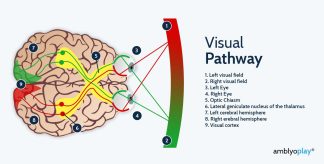
The eyes gather data, but the brain does the heavy lifting. Concussions commonly affect areas responsible for focus, eye teaming, tracking, motion detection, and visual-vestibular coordination. These disruptions often lead to a wide range of post-concussion vision problems.
When mentioned systems go offline or work inefficiently, you may feel like your eyes are “fine,” but your visual experience is anything but.
Try this simple test: Look away from this text and focus on something across the room.
Then look back at the screen. Observe how this feels. If the change in distance feels slow, effortful, or slightly uncomfortable, your focusing system may be working harder than usual.

Common Post-Concussion Visual Symptoms
Many people experience a mix of issues, some subtle and others impossible to ignore. The most common include:
• Blurred or double vision
• Difficulty focusing on near objects
• Eye fatigue and headaches
• Light sensitivity
• Tracking problems, especially during reading
• Motion sensitivity
• Reduced peripheral awareness
• Trouble shifting focus between near and far
• Dry eyes or burning
• Dizziness triggered by visual environments
• Symptom flare-ups during computer or phone use
Each symptom usually ties back to a specific visual skill that’s no longer functioning smoothly.
Give this a gentle try: Keep your eyes on one word on the screen and slowly turn your head left and right. If this creates discomfort, dizziness, or tension, your visual-vestibular system may still be sensitive to motion.
Everyday Challenges After a Concussion
The hardest part for many people is not the symptom itself, but how it disrupts daily life. Reading becomes exhausting. Screens are overwhelming. Crowded spaces feel chaotic. Grocery stores are suddenly “too bright” or “too busy.”
Check in with yourself right now: Notice how your eyes feel after reading the last few paragraphs. If your eyes feel tired, heavy, or strained, sustained near work may be triggering symptoms.
It’s not just about discomfort, it’s about losing independence or confidence in routine tasks. And when symptoms flare up unpredictably, people often start avoiding activities they used to enjoy.
This makes vision therapy for concussion an important option when visual symptoms linger.
How Vision Is Assessed After a Concussion
Before starting rehabilitation, it’s essential to understand which visual skills were affected. A thorough post-concussion assessment looks at how well the eyes and brain communicate, and not solely how clearly you see letters on a chart.
This evaluation typically includes:
• Eye alignment and teamwork
• Tracking and scanning movements
• Saccadic accuracy (jumping between targets)
• Vergence, or how the eyes move together
• Focusing flexibility
• Visual-vestibular interaction
• Processing speed and reaction
• Peripheral awareness

Try this: Look at the center of your screen. Without moving your eyes, notice how far to each side you can still see movement if you wiggle your fingers. If you only detect movement when your hands are closer than expected, your peripheral awareness may be reduced right now.
While vision specialists guide this process, they often collaborate with other professionals—such as physiotherapists, occupational therapists, or neurologists—so the visual plan fits neatly into your broader recovery. Vision therapy is an important pillar, but it usually works best when supported by a coordinated, whole-person approach.
What Vision Therapy Is
Vision therapy is a structured rehabilitation program designed to rebuild the efficiency and coordination of the visual system. It is one of the most effective forms of visual rehabilitation after concussion. Instead of strengthening eye muscles, it retrains the brain pathways responsible for clarity, comfort, and accurate visual processing.
Programs are tailored to individual deficits and may focus on improving eye teaming, focusing, tracking, depth perception, or tolerance for visually demanding environments. The goal is to help the visual system work automatically, without constant effort or symptom flare-ups. Try this right now: Hold your screen at a comfortable distance and move it slightly closer and farther while keeping your eyes on the text. What happens with the words? If they blur, jump, or double, your eye teaming system may be under extra strain at the moment.

Effective Methods and Tools
In-Office Vision Therapy
Supervised sessions allow clinicians to guide the process, introduce new challenges at the right pace, and monitor sensitivity. This is especially helpful early in recovery, when symptoms can fluctuate.
Prisms, Lenses, and Patching
These tools can offer immediate relief and help stabilize binocular vision. They may reduce double vision, ease eye strain, or support balance while deeper rehabilitation is underway.
Computer-Based Therapy
Home-based digital therapy helps build consistency between office visits.
Programs like AmblyoPlay target essential visual skills, including:
• Tracking, making reading and following movement smoother
• Eye teaming, supporting depth perception and reducing double vision
• Focus shifts, which help with switching between near and far tasks
• Motion and contrast sensitivity, useful for navigating visually busy spaces
Because the activities adjust gradually, users don’t get pushed into symptom overload — a crucial part of safe post-concussion rehab. As core skills improve, daily tasks often become more predictable and less draining.

Manual Activities
Tools such as Brock strings, Hart charts, Marsden balls, and balance-vision drills help integrate visual input with body movement. This reinforces spatial awareness and steadier coordination.
What Improvements to Expect
When vision therapy is matched to the right deficits, many post-concussion challenges improve noticeably, the most common being reading endurance, screen tolerance, fewer headaches, and improved eye alignment.
As visual skills return to normal, mental fatigue often drops, and people regain confidence in their everyday routines.
Recovery Timeline
Healing timelines vary, but several themes hold true:
• Some improvements may appear within weeks.
• More complex cases may take several months.
• Early, consistent therapy tends to support better outcomes.
• Progress depends on pacing — enough challenge to stimulate change, but not enough to trigger symptoms.
• Gentle progression is essential. Overloading the visual system can slow everything down.
Recovery is rarely linear, and that’s completely normal.
Vision Therapy Can Support Recovery, but What Are the Starting Points
Current research suggests that vision therapy can significantly support recovery from concussion-related visual issues, especially when therapy starts early and is integrated into a broader rehabilitation plan.
If symptoms linger or interfere with daily life, a personalized vision therapy plan can help restore comfort, clarity, and confidence. A balanced approach that blends professional guidance with safe, home-based training tools, such as AmblyoPlay, can make the process smoother and more manageable.
Be patient with yourself. With the right support and steady progress, your visual system can regain clarity, comfort, and confidence again.
Frequently Asked Questions: Vision Therapy for Concussion
How common are vision problems after a concussion?
Given that over half of the brain is dedicated to processing visual information, visual issues are extremely common following a concussion. Even a mild concussion can disrupt eye teaming, focusing, tracking, and visual vestibular system.
How soon after a concussion should I get my vision checked?
It’s best to schedule a functional vision evaluation as soon as you notice eye fatigue and headaches, blurred or double vision, light sensitivity or difficulty focusing. Early intervention can significantly speed up your recovery.
What’s the difference between vision therapy and physical therapy for concussions?
Physical therapy targets balance and movement, while vision therapy retrains how the eyes and brain work together. Many patients benefit from combining both treatments.
How long does the vision therapy recovery take?
Since every patient is unique, the timeline for recovery varies. While most patients begin to see improvement within several weeks, full recovery can take a few months, depending on the severity of the injury and their consistency with the therapy.
Can vision therapy be done at home, or do I need in-office sessions?
Both options can be effective. In-office therapy allows specialists to closely monitor your progress and adjust exercises, especially early in recovery, whereas home-based digital programs can extend the benefits by providing regular structured practice between appointments.
Can vision therapy help even if my eyes seem “fine”?
Yes. Many post-concussion visual issues stem from the brain, not the eyes themselves. Even with perfect eyesight, you might still struggle with focusing, tracking, motion sensitivity, peripheral awareness or visual overload. Vision therapy addresses these brain-based visual skills specifically, going beyond just clear vision.