Lazy eye can lead to reduced visual acuity and poor depth perception. While lazy eye requires medical intervention, there are several simple eye exercises for lazy eye you can do at home to supplement the treatment process.
In this blog, we will give you ten ideas for eye exercises anyone can do at home, at zero cost. Furthermore, you can incorporate these easy exercises into your daily routine and correct lazy eye. Have fun fixing your lazy eyes!
Table of contents
- What is Lazy Eye (Amblyopia)?
- Can Eye Exercises Help Strengthen Lazy Eye?
- 10 At-Home Exercises to Strengthen Eyes: Simple Eye Exercises for Lazy Eye
- Want to Start Fixing Your Lazy Eye Today?
- Try Gamified Vision Therapy: AmblyoPlay
- Conclusion: Strengthen Eyes With Simple Eye Exercises for Lazy Eye
- Frequently Asked Questions
What is Lazy Eye (Amblyopia)?
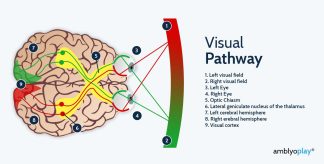
Lazy eye, medically known as amblyopia, is a vision condition when the connection between the brain and eyes break down. This condition typically arises when the brain and the affected eye do not work together properly, causing the brain to favor the other (stronger) eye.
Symptoms of lazy eye include:
- Blurry or double vision
- Poor depth perception
- Eye misalignment
- Difficulty focusing

Can Eye Exercises Help Strengthen Lazy Eye?
Yes. Eye exercises to strengthen eyes can improve focus, coordination, and muscle control, especially when combined with treatments like patching or digital vision therapy.
These exercises stimulate both eyes and encourage the brain to reconnect with the weaker one.
10 At-Home Exercises to Strengthen Eyes: Simple Eye Exercises for Lazy Eye
1. Eye Patching
Eye patching is a common and effective technique used to treat lazy eye. It involves covering the stronger eye with a patch, forcing the weaker eye to work harder. Start by wearing theeye patch for a few hours each day and gradually increase the duration over time.
Maybe you would be interested in a blog post How to encourage my kid to eye patch.
2. Focus Shifting
This exercise helps improve coordination between both eyes. Hold your finger in front of your face, focusing on it. Slowly move the finger closer to your nose while maintaining focus. Then, slowly move it away again. Repeat this exercise for a few minutes each day.
3. Eye Tracking
Sit in a comfortable position and focus on a small object, such as a pen or pencil. Move the object in different directions while following it with your eyes. This exercise enhances eye movement and helps improve tracking abilities.
4. Near-Far Shifting
Hold two objects at different distances—one closer to you and another farther away. Focus on the closer object for a few seconds, then shift your focus to the farther object. Repeat this exercise multiple times, gradually increasing the distance between the objects.
5. Eye Rolling
Sit comfortably and slowly roll your eyes in a clockwise direction. Then, switch to an anti-clockwise direction. Perform this exercise for a few minutes daily. Eye rolling helps strengthen eye muscles and improve flexibility.

6. Visual Scanning
Take a sheet of paper with numbers or letters arranged randomly. Use your eyes to find and read each number or letter in sequence, starting from the top left corner. This exercise enhances visual scanning abilities and improves eye coordination.
7. Focus Switching
Find two objects—one nearby and one at a distance. Focus on the nearby object for a few seconds, then quickly shift your focus to the distant object. Repeat this exercise several times, aiming for a smooth transition between near and far focus.
8. Letter Tracing
Using your finger, trace letters of the alphabet on a table or any flat surface. Focus your eyes on your finger and the traced letters as you move along. This exercise improves eye movement and coordination.

9. Follow the Light
In a dimly lit room, hold a small flashlight or penlight. Move the light slowly in different directions, up and down, and side to side. Use your eyes to track the light’s movement. This exercise enhances eye coordination and strengthens eye muscles.
10. Simple Eye Exercise for Lazy Eye: Brock String
Brock string consists of a long string, typically around 10 feet (3 meters) in length, with several colored beads or buttons attached at specific intervals. The string is usually secured at both ends, with one end tied to a stationary object and the other end held by the individual using it.

Instructions for Brock String
- Set up the string: Start by securing one end of the string to a stationary object, such as a doorknob or chair. Hold the other end of the string, extending it straight out in front of you at eye level.
- Bead placement: The string should have several colored beads or buttons attached at equal intervals. The beads are typically arranged in a specific pattern: one bead close to you, followed by two beads slightly farther away, and then three beads even farther away.
- Focus and alignment: Stand or sit comfortably and focus your gaze on the closest bead. The bead should appear single and clear. This initial focus helps align your eyes and establish a baseline for the exercise.
- Shift focus: While maintaining your gaze on the first bead, become aware of the other beads in your peripheral vision. Without moving your head, shift your attention to the next bead in the sequence. The goal is to see all the beads in a single line while maintaining clear focus on each individual bead.
- Check for alignment: As you shift your focus from bead to bead, pay attention to any misalignment or double vision. The Brock string exercise helps to train your eyes to converge and work together efficiently, improving depth perception and eye coordination.
Want to Start Fixing Your Lazy Eye Today?

Try Gamified Vision Therapy: AmblyoPlay
Looking for a fun, structured way to do vision therapy at home? AmblyoPlay offers interactive games on your tablet or computer designed to improve your visual skills. AmblyoPlay Vision Therapy is an exciting approach to addressing lazy eye and other binocular vision problems.
It is performed by playing interactive and engaging games on a tablet or computer in the comfort of your home for 30-minutes per day.
Turn Therapy Into an Enjoyable Experience!
By incorporating enjoyable exercises into the vision therapy process, AmblyoPlay turns therapy into a delightful experience.
Users wear red and green glasses while playing games, it stimulates both eyes separately but also teaches them how to work together efficiently.
With AmblyoPlay, the journey to better vision becomes not just effective but also enjoyable and rewarding. Kids and adults are more motivated to play games and progress within the games and therefore, the adherence to exercises increases.
Read more about how AmblyoPlay works here.
Conclusion: Strengthen Eyes With Simple Eye Exercises for Lazy Eye
While these exercises can be beneficial for individuals withlazy eye, it’s important to consult an eye care professional for a comprehensive diagnosis and treatment plan. These exercises should complement professional guidance and treatment, not replace.
Consistency is key, so try to incorporate these simple eye exercises into your daily routine to help improve coordination and strengthen your weaker eye. With time, dedication, and proper care, you can make significant progress in correcting lazy eye and improving your vision.
Frequently Asked Questions
What is the Brock String used for?
The Brock String is a vision therapy training tool used to enhance eye coordination, depth perception, and convergence ability.
What is eye patching?
Eye patching is a common and effective technique used to treat lazy eyes. It involves covering the stronger eye with a patch, forcing the weaker eye to work harder.
Which exercises can strengthen my lazy eye?
There are several simple eye exercises you can do at home to supplement the treatment process. For example, eye patching, focus switching, eye tracking, near-far shifting, eye rolling, visual scanning, letter tracing, following the light, and Brock string exercises.
Can lazy eye exercises be done at home?
Yes, exercises can be done at home to help improve a lazy eye, also known as amblyopia. However, it’s crucial to consult with an eye care professional. These exercises are typically more effective when combined with other treatments like wearing an eye patch or computer-based vision therapy.
How often should I do eye exercises?
10–15 minutes, 1–2 times per day is ideal for most people. More complex therapies may require supervision.